

Journal Article Summary
The article examines how labeling options in patient decision aids affects the choices patients make and their decision-making processes. This topic is significant because biases, both conscious and unconscious, can influence how individuals interpret information and make health-related decisions. Understanding these dynamics can help improve the effectiveness of decision aids, which are designed to enhance the quality of patient choices by providing clear information about treatment options and their outcomes.
In the study, researchers surveyed 536 participants from two online panels, presenting them with a scenario where they had to choose between aspirin and a statin to reduce heart attack risk. The decision aids provided either labeled or unlabeled options and varied in complexity, with some offering just information and others including guidance on decision-making. The results showed that participants using unlabeled options were more likely to choose the statin (56%) compared to those with labeled options (25%). This preference persisted even after accounting for factors like age, gender, and health literacy, indicating that the way options are presented can significantly influence patient choices.
However, the study has limitations, such as using hypothetical scenarios rather than real-life decisions, which may not fully capture how patients would behave in actual situations. Additionally, the familiarity of the medications used in the study could have affected participants' perceptions. Patients should discuss their treatment options with healthcare professionals to ensure they understand the risks and benefits, as well as to consider how labeling might influence their decisions. This conversation can help mitigate biases and lead to more informed choices in their healthcare journey.
Medication Safety Note
This journal article summary is provided for educational purposes only and is not medical advice. Always consult a licensed healthcare professional before starting, stopping, or changing any medication.
Article Cited
- Dolan James G., Cherkasky Olena A., Chin Nancy, Veazie Peter J.. Decision Aids: the Effect of Labeling Options on Patient choices and Decision-Making. Medical decision making : an international journal of the Society for Medical Decision Making 2015. DOI: 10.1177/0272989X15598532. PMID: 26229084. PMCID: PMC4592400.
Featured Pill Pals Product
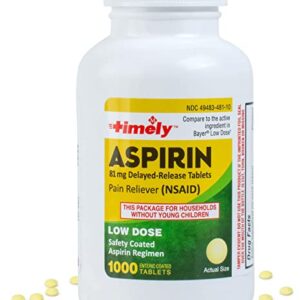
OTC 1000 (1,000) Count Low Dose Aspirin 81mg for Adults and Children 12 years and over --- Generic For Bayer Low Dose --- Time Cap Labs
1000 (1,000) Count Low Dose Aspirin 81mg for Adults and Children 12 years and over --- Generic For Bayer Low Dose --- Time Cap Labs is available through Pill Pals Pharmacy with cash-pay pharmacy pricing and free shipping where available. No prescription required for eligible over-the-counter purchases.