

Journal Article Summary
The article investigates the differences in how two forms of the antihistamine cetirizine—levocetirizine and (S)-cetirizine—bind to human histamine H1 receptors. Understanding these differences is important because it can help improve the effectiveness of treatments for conditions like allergies and inflammation, which are influenced by histamine activity. The study focuses on a specific amino acid, Lys191, in the receptor that appears to play a crucial role in how these two compounds interact with the receptor.
To explore this, researchers used Chinese hamster ovary cells that expressed either the normal or a mutated version of the H1 receptor. They measured how well levocetirizine and (S)-cetirizine bound to these receptors at different temperatures. The findings revealed that levocetirizine binds more strongly than (S)-cetirizine due to different binding forces, particularly the hydrophobic interactions that are influenced by the Lys191 residue. When Lys191 was mutated, the binding affinities for both compounds decreased, indicating that this amino acid is significant for their interaction with the receptor.
However, the study has limitations, including the use of cell models that may not fully replicate human physiology. Patients should be aware that while this research provides insights into how these medications work, it does not directly translate into clinical recommendations. It is advisable for readers to discuss any concerns or questions about antihistamines and their effects with a healthcare professional, especially regarding their specific health conditions and treatment options.
Medication Safety Note
This journal article summary is provided for educational purposes only and is not medical advice. Always consult a licensed healthcare professional before starting, stopping, or changing any medication.
Article Cited
- Hishinuma Shigeru, Tamura Yuri, Kobayashi Chihiro, Akatsu Chizuru, Shoji Masaru. Differential Regulation of Thermodynamic Binding Forces of Levocetirizine and (S)-Cetirizine by Lys191 in Human Histamine H1 Receptors. International Journal of Molecular Sciences 2018. DOI: 10.3390/ijms19124067. PMID: 30558340. PMCID: PMC6321019.
Featured Pill Pals Product
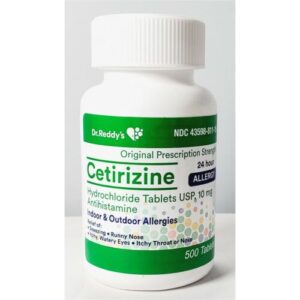
Cetirizine 10 mg Tablets - 500 count - Generic For Zyrtec --- DR REDDY
Cetirizine 10 mg Tablets - 500 count - Generic For Zyrtec --- DR REDDY is available through Pill Pals Pharmacy with cash-pay pharmacy pricing and free shipping where available. No prescription required for eligible over-the-counter purchases.