




Description


Citalopram 20 mg Tablets is available by prescription only. Go ahead and place your purchase. After making payment, we will ensure that a valid prescription is received from your prescriber.
Drug Label Highlights
These highlights do not include all the information needed to use CITALOPRAM TABLETS safely and effectively. See full prescribing information for CITALOPRAM TABLETS.
CITALOPRAM tablets, for oral use
Initial U.S. Approval: 1998
Warning: Suicidal Thoughts And Behaviors
See full prescribing information for complete boxed warning.
Increased risk of suicidal thoughts and behavior in pediatric and young adult patients taking antidepressants. Closely monitor all antidepressant-treated patients for clinical worsening and emergence of suicidal thoughts and behaviors (5.1).
Citalopram is not approved for use in pediatric patients (8.4).
Recent Major Changes
Warnings and Precautions (5.3, 5.4) 08/2023
Indications And Usage
Citalopram tablets are a selective serotonin reuptake inhibitor (SSRI) indicated for the treatment of major depressive disorder (MDD) in adults (1).
Dosage And Administration
Administer once daily with or without food (2).
Initial dosage is 20 mg once daily; after one week may increase to maximum dosage of 40 mg once daily (2.1).
Patients greater than 60 years of age, patients with hepatic impairment, and CYP2C19 poor metabolizers: maximum recommended dosage is 20 mg once daily (2.2).
When discontinuing citalopram tablets, reduce dosage gradually (2.4, 5.6).
Dosage Forms And Strengths
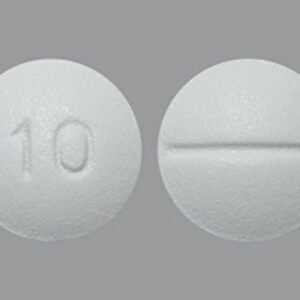
Tablets: 10 mg; 20 mg, scored; and 40 mg, scored (3)
Contraindications
Concomitant use of monoamine oxidase inhibitors (MAOIs) or use within 14 days of discontinuing a MAOI (4).
Concomitant use of pimozide (4).
Known hypersensitivity to citalopram or any of the inactive ingredients of citalopram (4).
Warnings And Precautions
- (5.3, 5.4) 08/2023 INDICATIONS AND USAGE Citalopram tablets are a selective serotonin reuptake inhibitor (SSRI) indicated for the treatment of major depressive disorder (MDD) in adults (1). DOSAGE AND ADMINISTRATION
- Administer once daily with or without food (2).
- Initial dosage is 20 mg once daily; after one week may increase to maximum dosage of 40 mg once daily (2.1).
- Patients greater than 60 years of age, patients with hepatic impairment, and CYP2C19 poor metabolizers: maximum recommended dosage is 20 mg once daily (2.2).
- When discontinuing citalopram tablets, reduce dosage gradually (2.4, 5.6). DOSAGE FORMS AND STRENGTHS Tablets: 10 mg; 20 mg, scored; and 40 mg, scored (3) CONTRAINDICATIONS
- Concomitant use of monoamine oxidase inhibitors (MAOIs) or use within 14 days of discontinuing a MAOI (4).
- Concomitant use of pimozide (4).
- Known hypersensitivity to citalopram or any of the inactive ingredients of citalopram (4). WARNINGS AND PRECAUTIONS
- (5.3, 5.4) 08/2023 INDICATIONS AND USAGE Citalopram tablets are a selective serotonin reuptake inhibitor (SSRI) indicated for the treatment of major depressive disorder (MDD) in adults (1). DOSAGE AND ADMINISTRATION
- Administer once daily with or without food (2).
- Initial dosage is 20 mg once daily; after one week may increase to maximum dosage of 40 mg once daily (2.1).
- Patients greater than 60 years of age, patients with hepatic impairment, and CYP2C19 poor metabolizers: maximum recommended dosage is 20 mg once daily (2.2).
- When discontinuing citalopram tablets, reduce dosage gradually (2.4, 5.6). DOSAGE FORMS AND STRENGTHS Tablets: 10 mg; 20 mg, scored; and 40 mg, scored (3) CONTRAINDICATIONS
- Concomitant use of monoamine oxidase inhibitors (MAOIs) or use within 14 days of discontinuing a MAOI (4).
- Concomitant use of pimozide (4).
- Known hypersensitivity to citalopram or any of the inactive ingredients of citalopram (4). WARNINGS AND PRECAUTIONS
QT-Prolongation and Torsade de Pointes: Dose-dependent QTc prolongation, Torsade de pointes, ventricular tachycardia, and sudden death have occurred. Avoid use of citalopram in patients with congenital long QT syndrome, bradycardia, hypokalemia or hypomagnesemia, recent acute myocardial infarction, or uncompensated heart failure and patients taking other drugs that prolong the QTc interval. Monitor electrolytes in patients at high risk for hypokalemia or hypomagnesemia. Discontinue citalopram in patients with persistent QTc measurements > 500 ms (5.2, 7).
Serotonin Syndrome: Increased risk when co-administered with other serotonergic agents, but also when taken alone. If occurs, discontinue citalopram and serotonergic agents and initiate supportive measures (5.3).
Increased Risk of Bleeding: Concomitant use of aspirin, nonsteroidal anti-inflammatory drugs, other antiplatelet drugs, warfarin and other anticoagulants may increase this risk (5.4).
Activation of Mania/Hypomania: Screen patients for bipolar disorder (5.5).
Seizures: Use with caution in patients with seizure disorder (5.7).
Angle-Closure Glaucoma: Avoid use of citalopram in patients with untreated anatomically narrow angles (5.8).
Hyponatremia: Can occur in association with syndrome of inappropriate antidiuretic hormone secretion (5.9).
Sexual Dysfunction: Citalopram may cause symptoms of sexual dysfunction. (5.10).
Adverse Reactions
Most common adverse reaction (incidence ≥ 5% and twice placebo) is ejaculation disorder (primarily ejaculation delay) (6.1).
To report SUSPECTED ADVERSE REACTIONS, contact Aurobindo Pharma USA, Inc. at 1-866-850-2876 or FDA at 1-800-FDA-1088 or www.fda.gov/medwatch.
Drug Interactions
CYP2C19 Inhibitors: Citalopram 20 mg daily is the maximum recommended dosage for patients taking concomitant CYP2C19 inhibitors (5.2, 7).
Use In Specific Populations
Pregnancy: SSRI use, particularly late in pregnancy, may increase the risk for persistent pulmonary hypertension and symptoms of poor adaptation (respiratory distress, temperature instability, feeding difficulties, hypotonia, tremor, irritability) in the neonate (8.1).
See 17 for PATIENT COUNSELING INFORMATION and Medication Guide.
Revised: 5/2024
DailyMed highlights last updated: 2026-06-24 22:52:27












Reviews
There are no reviews yet.