
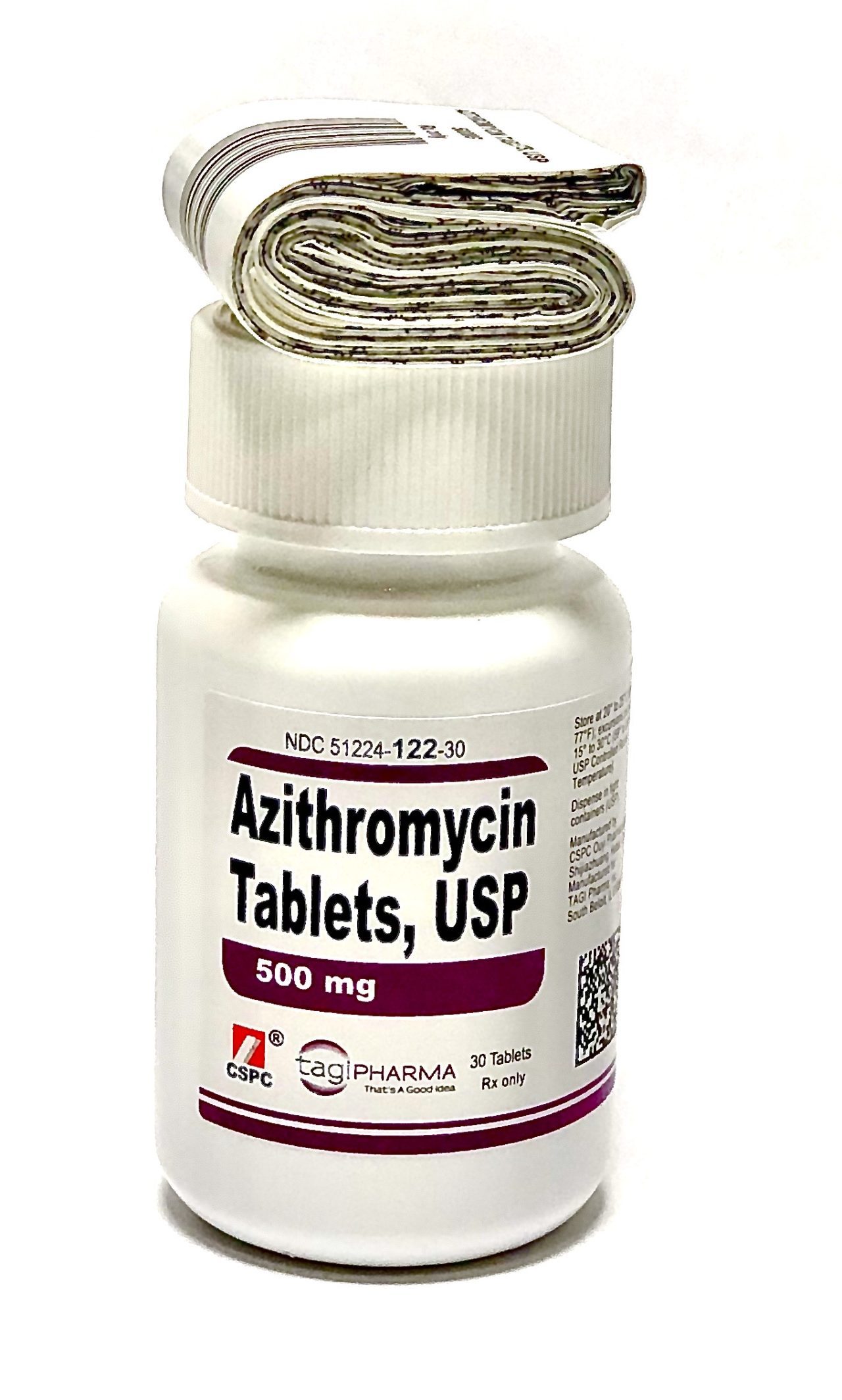
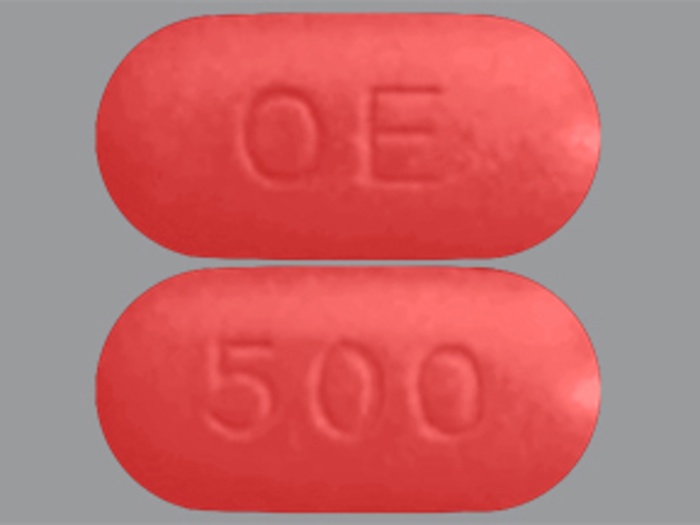



Description

Azithromycin is available by prescription only. Go ahead and place your purchase. After making payment, we will ensure that a valid prescription is received from your prescriber.
Drug Label Highlights
These highlights do not include all the information needed to use AZITHROMYCIN TABLETS safely and effectively. See full prescribing information for AZITHROMYCIN TABLETS.
AZITHROMYCIN tablets, for oral use
Initial U.S. Approval: 1991
Indications And Usage
Azithromycin is a macrolide antibacterial drug indicated for mild to moderate infections caused by designated, susceptible bacteria:
Acute bacterial exacerbations of chronic bronchitis in adults (1.1)
Acute bacterial sinusitis in adults (1.1)
Uncomplicated skin and skin structure infections in adults (1.1)
Urethritis and cervicitis in adults (1.1)
Genital ulcer disease in men (1.1)
Acute otitis media in pediatric patients (6 months of age and older) (1.2)
Community-acquired pneumonia in adults and pediatric patients (6 months of age and older) (1.1, 1.2)
Pharyngitis/tonsillitis in adults and pediatric patients (2 years of age and older) (1.1, 1.2)
Limitation of Use:
Azithromycin should not be used in patients with pneumonia who are judged to be inappropriate for oral therapy because of moderate to severe illness or risk factors. (1.3)
To reduce the development of drug-resistant bacteria and maintain the effectiveness of azithromycin and other antibacterial drugs, azithromycin should be used only to treat infections that are proven or strongly suspected to be caused by susceptible bacteria. (1.4)
Dosage And Administration
Adult Patients (2.1)
InfectionRecommended Dose/Duration of Therapy
Community-acquired pneumonia (mild severity)
Pharyngitis/tonsillitis (second-line therapy)
Skin/skin structure (uncomplicated)500 mg as a single dose on Day 1, followed by 250 mg once daily on Days 2 through 5
Acute bacterial exacerbations of chronic bronchitis
(mild to moderate)500 mg as a single dose on Day 1, followed by 250 mg once daily on Days 2 through 5 or 500 mg once daily for 3 days
Acute bacterial sinusitis500 mg once daily for 3 days
Genital ulcer disease (chancroid)
Non-gonococcal urethritis and cervicitisOne single 1 gram dose
Gonococcal urethritis and cervicitisOne single 2 gram dose
Pediatric Patients (2.2)
InfectionRecommended Dose/Duration of Therapy
Acute otitis media (6 months of age and older)30 mg/kg as a single dose or 10 mg/kg once daily for 3 days or 10 mg/kg as a single dose on Day 1 followed by 5 mg/kg/day on Days 2 through 5
Acute bacterial sinusitis (6 months of age and older)10 mg/kg once daily for 3 days
Community-acquired pneumonia (6 months of age and older)10 mg/kg as a single dose on Day 1 followed by 5 mg/kg once daily on Days 2 through 5
Pharyngitis/tonsillitis (2 years of age and older)12 mg/kg once daily for 5 days
Dosage Forms And Strengths
Azithromycin tablets 500 mg (3)
Contraindications
Patients with known hypersensitivity to azithromycin, erythromycin, any macrolide, or ketolide drug. (4.1)
Patients with a history of cholestatic jaundice/hepatic dysfunction associated with prior use of azithromycin. (4.2)
Warnings And Precautions
- Serious (including fatal) allergic and skin reactions: Discontinue azithromycin if reaction occurs. (5.1)
- Hepatotoxicity: Severe, and sometimes fatal, hepatotoxicity has been reported. Discontinue azithromycin immediately if signs and symptoms of hepatitis occur. (5.2)
- Infantile Hypertrophic Pyloric Stenosis (IHPS): Following the use of azithromycin in neonates (treatment up to 42 days of life), IHPS has been reported. Direct parents and caregivers to contact their physician if vomiting or irritability with feeding occurs. (5.3)
- Prolongation of QT interval and cases of torsades de pointes have been reported. This risk which can be fatal should be considered in patients with certain cardiovascular disorders including known QT prolongation or history torsades de pointes, those with proarrhythmic conditions, and with other drugs that prolong the QT interval. (5.4)
- Clostridium difficile-Associated Diarrhea: Evaluate patients if diarrhea occurs. (5.5)
- Azithromycin may exacerbate muscle weakness in persons with myasthenia gravis. (5.6)
- Serious (including fatal) allergic and skin reactions: Discontinue azithromycin if reaction occurs. (5.1)
- Hepatotoxicity: Severe, and sometimes fatal, hepatotoxicity has been reported. Discontinue azithromycin immediately if signs and symptoms of hepatitis occur. (5.2)
- Infantile Hypertrophic Pyloric Stenosis (IHPS): Following the use of azithromycin in neonates (treatment up to 42 days of life), IHPS has been reported. Direct parents and caregivers to contact their physician if vomiting or irritability with feeding occurs. (5.3)
- Prolongation of QT interval and cases of torsades de pointes have been reported. This risk which can be fatal should be considered in patients with certain cardiovascular disorders including known QT prolongation or history torsades de pointes, those with proarrhythmic conditions, and with other drugs that prolong the QT interval. (5.4)
- Clostridium difficile-Associated Diarrhea: Evaluate patients if diarrhea occurs. (5.5)
- Azithromycin may exacerbate muscle weakness in persons with myasthenia gravis. (5.6)
Serious (including fatal) allergic and skin reactions: Discontinue azithromycin if reaction occurs. (5.1)
Hepatotoxicity: Severe, and sometimes fatal, hepatotoxicity has been reported. Discontinue azithromycin immediately if signs and symptoms of hepatitis occur. (5.2)
Infantile Hypertrophic Pyloric Stenosis (IHPS): Following the use of azithromycin in neonates (treatment up to 42 days of life), IHPS has been reported. Direct parents and caregivers to contact their physician if vomiting or irritability with feeding occurs. (5.3)
Prolongation of QT interval and cases of torsades de pointes have been reported. This risk which can be fatal should be considered in patients with certain cardiovascular disorders including known QT prolongation or history torsades de pointes, those with proarrhythmic conditions, and with other drugs that prolong the QT interval. (5.4)
Clostridium difficile-Associated Diarrhea: Evaluate patients if diarrhea occurs. (5.5)
Azithromycin may exacerbate muscle weakness in persons with myasthenia gravis. (5.6)
Adverse Reactions
Most common adverse reactions are diarrhea (5% to 14%), nausea (3% to 18%), abdominal pain (3% to 7%), or vomiting (2% to 7%). (6.1)
To report SUSPECTED ADVERSE REACTIONS, contact TAGI Pharma, Inc. at 1-855-225-8244 or FDA at 1-800-FDA-1088 or www.fda.gov/medwatch.
Drug Interactions
Nelfinavir: Close monitoring for known adverse reactions of azithromycin, such as liver enzyme abnormalities and hearing impairment, is warranted. (7.1)
Warfarin: Use with azithromycin may increase coagulation times; monitor prothrombin time. (7.2)
Use In Specific Populations
Pediatric use: Safety and effectiveness in the treatment of patients under 6 months of age have not been established. (8.4)
Geriatric use: Elderly patients may be more susceptible to development of torsades de pointes arrhythmias. (8.5)
See 17 for PATIENT COUNSELING INFORMATION and FDA-approved patient labeling.
Revised: 8/2020
DailyMed highlights last updated: 2026-06-24 22:04:26









Reviews
There are no reviews yet.