

Journal Article Summary
The article investigates the role of a specific protein, DDIT4, in how aspirin affects fatty acid metabolism in human breast cancer cells. Understanding this relationship is important because breast cancer is a leading cause of cancer-related deaths worldwide, and aspirin has shown potential as an anticancer treatment. However, the exact mechanisms through which aspirin exerts its effects are not fully understood, making it crucial to identify biomarkers that can predict which patients might benefit from aspirin therapy.
The researchers used two human breast cancer cell lines, MCF-7 and MDA-MB-468, to study the effects of downregulating DDIT4 using a technique called siRNA. They found that reducing DDIT4 levels increased the activity of key enzymes involved in fatty acid metabolism when the cells were treated with aspirin. Specifically, in the MCF-7 cells, aspirin treatment led to a two-fold increase in the phosphorylation of a protein called ACC1, which inhibits its activity, while in the MDA-MB-468 cells, aspirin did not affect ACC1 phosphorylation. The study revealed that DDIT4 knockdown resulted in increased expression of another enzyme, CPT1A, in MCF-7 cells, indicating that DDIT4 plays a significant role in regulating these metabolic pathways.
Despite these findings, the study has limitations, including the use of only two cell lines, which may not fully represent the complexity of breast cancer in patients. Additionally, the implications of these results for patient safety and treatment effectiveness are not yet clear. Patients and caregivers should discuss these findings with healthcare professionals, especially regarding the potential use of aspirin in breast cancer treatment and the importance of understanding individual tumor biology, including DDIT4 expression levels. Further research is needed to explore the clinical relevance of these findings and how they might influence treatment strategies.
Medication Safety Note
This journal article summary is provided for educational purposes only and is not medical advice. Always consult a licensed healthcare professional before starting, stopping, or changing any medication.
Article Cited
- Savukaitytė Aistė, Bartnykaitė Agnė, Bekampytė Justina, Ugenskienė Rasa, Juozaitytė Elona. DDIT4 Downregulation by siRNA Approach Increases the Activity of Proteins Regulating Fatty Acid Metabolism upon Aspirin Treatment in Human Breast Cancer Cells. Current Issues in Molecular Biology 2023. DOI: 10.3390/cimb45060296. PMID: 37367045. PMCID: PMC10297095.
Featured Pill Pals Product
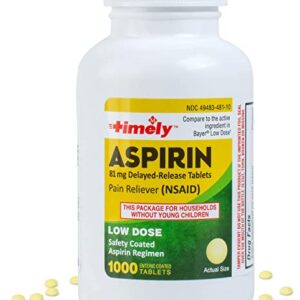
1000 (1,000) Count Low Dose Aspirin 81mg for Adults and Children 12 years and over --- Generic For Bayer Low Dose --- Time Cap Labs --- Over The Counter
1000 (1,000) Count Low Dose Aspirin 81mg for Adults and Children 12 years and over — Generic For Bayer Low Dose — Time Cap Labs — Over The Counter is available through Pill Pals Pharmacy with cash-pay pharmacy pricing and free shipping where available. This is an Over The Counter Product, so no prescription is required.However, your prescriber can still write for it as a prescription, if desired.