
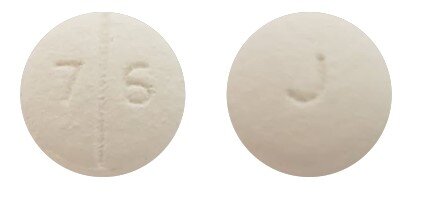



Description


Metoprolol Succinate (Extended Release) 50 mg Tablets is available by prescription only. Go ahead and place your purchase. After making payment, we will ensure that a valid prescription is received from your prescriber.
Drug Label Highlights
These highlights do not include all the information needed to use METOPROLOL SUCCINATE EXTENDED-RELEASE TABLETS safely and effectively. See full prescribing information for METOPROLOL SUCCINATE EXTENDED-RELEASE TABLETS.
METOPROLOL SUCCINATE extended-release tablets, for oral use
Initial U.S. Approval: 1992
Indications And Usage
Metoprolol succinate extended-release tablets, are a beta-adrenergic blocker indicated for the treatment of:
Hypertension, to lower blood pressure. Lowering blood pressure reduces the risk of fatal and non-fatal cardiovascular events, primarily strokes and myocardial infarctions. (
1.1)
Angina Pectoris. (
1.2)
Heart Failure, to reduce the risk of cardiovascular mortality and heart failure hospitalizations in patients with heart failure (
1.3)
Dosage And Administration
Administer once daily. Titrate at weekly or longer intervals as needed and tolerated. (
2)
Hypertension: Starting dose is 25 to 100 mg. (
2.1)
Angina Pectoris: Starting dose is 100 mg. (
2.2)
Heart Failure: Starting dose is 12.5 or 25 mg. (
2.3)
Switching from immediate-release metoprolol to metoprolol succinate extended-release tablets: use the same total daily dose of metoprolol succinate extended-release tablets. (
2)
Dosage Forms And Strengths
Metoprolol succinate extended-release tablets: 25 mg, 50 mg, 100 mg, and 200 mg. (
3)
Contraindications
Known hypersensitivity to product components. (
4)
Severe bradycardia: Greater than first degree heart block, or sick sinus syndrome without a pacemaker. (
4)
Cardiogenic shock or decompensated heart failure. (
4)
Warnings And Precautions
- Abrupt cessation may exacerbate myocardial ischemia. ( 5.1)
- Heart Failure: Worsening cardiac failure may occur. ( 5.2)
- Bronchospastic Disease: Avoid beta-blockers. ( 5.3)
- Concomitant use of glycosides, clonidine, diltiazem and verapamil with beta-blockers can increase the risk of bradycardia. ( 5.4)
- Pheochromocytoma: Initiate therapy with an alpha-blocker. ( 5.5)
- Major Surgery: Avoid initiation of high-dose extended-release metoprolol in patients undergoing non-cardiac surgery. Do not routinely withdraw chronic beta blocker therapy prior to surgery. ( 5.6, 6.1)
- Hypoglycemia: May increase risk for hypoglycemia and mask early warning signs. ( 5.7)
- Thyrotoxicosis: Abrupt withdrawal in patients with thyrotoxicosis might precipitate a thyroid storm. ( 5.8)
- Abrupt cessation may exacerbate myocardial ischemia. ( 5.1)
- Heart Failure: Worsening cardiac failure may occur. ( 5.2)
- Bronchospastic Disease: Avoid beta-blockers. ( 5.3)
- Concomitant use of glycosides, clonidine, diltiazem and verapamil with beta-blockers can increase the risk of bradycardia. ( 5.4)
- Pheochromocytoma: Initiate therapy with an alpha-blocker. ( 5.5)
- Major Surgery: Avoid initiation of high-dose extended-release metoprolol in patients undergoing non-cardiac surgery. Do not routinely withdraw chronic beta blocker therapy prior to surgery. ( 5.6, 6.1)
- Hypoglycemia: May increase risk for hypoglycemia and mask early warning signs. ( 5.7)
- Thyrotoxicosis: Abrupt withdrawal in patients with thyrotoxicosis might precipitate a thyroid storm. ( 5.8)
Abrupt cessation may exacerbate myocardial ischemia. (
5.1)
Heart Failure: Worsening cardiac failure may occur. (
5.2)
Bronchospastic Disease: Avoid beta-blockers. (
5.3)
Concomitant use of glycosides, clonidine, diltiazem and verapamil
with beta-blockers can increase the risk of bradycardia. (
5.4)
Pheochromocytoma: Initiate therapy with an alpha-blocker. (
5.5)
Major Surgery: Avoid initiation of high-dose extended-release metoprolol in patients undergoing non-cardiac surgery. Do not routinely withdraw chronic beta blocker therapy prior to surgery. (
5.6,
6.1)
Hypoglycemia: May increase risk for hypoglycemia and mask early warning signs. (
5.7)
Thyrotoxicosis: Abrupt withdrawal in patients with thyrotoxicosis might precipitate a thyroid storm. (
5.8)
Peripheral Vascular Disease: Can aggravate symptoms of arterial insufficiency. (
5.9)
Patients may be unresponsive to the usual doses of epinephrine used to treat allergic reaction. (
5.10)
Adverse Reactions
Most common adverse reactions: tiredness, dizziness, depression, shortness of breath, bradycardia, hypotension, diarrhea, pruritus, rash. (
6.1)
To report SUSPECTED ADVERSE REACTIONS, contact Hetero Labs Limited at 1-866-495-1995 or FDA at 1-800-FDA-1088 or
www.fda.gov/medwatch.
Drug Interactions
Catecholamine-depleting drugs may have an additive effect when given with beta-blocking agents. (
7.1)
CYP2D6 Inhibitors are likely to increase metoprolol concentration. (
7.2)
Beta-blockers including metoprolol, may exacerbate the rebound hypertension that can follow the withdrawal of clonidine. (
7.3)
Use In Specific Populations
Hepatic Impairment: Consider initiating metoprolol succinate extended-release tablets therapy at low doses and gradually increase dosage to optimize therapy, while monitoring closely for adverse events. (
8.6)
See 17 for PATIENT COUNSELING INFORMATION.
Revised: 3/2024
DailyMed highlights last updated: 2026-06-24 23:03:15








Reviews
There are no reviews yet.