
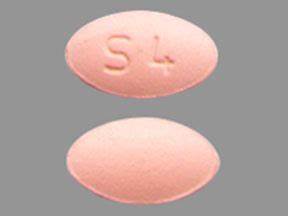
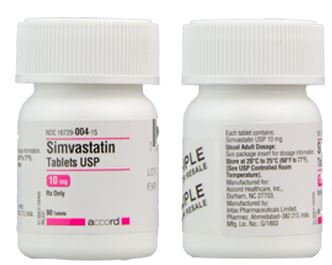



Description


Drug Label Highlights
These highlights do not include all the information needed to use SIMVASTATIN TABLETS safely and effectively. See full prescribing information for SIMVASTATIN TABLETS.
SIMVASTATIN tablets, for oral use
Initial U.S. Approval:1991
Recent Major Changes
Dosage and Administration (
2.1)
3/2023
Indications And Usage
Simvastatin tablets are an HMG-CoA reductase inhibitor indicated: (
1)
To reduce the risk of total mortality by reducing risk of coronary heart disease death, non-fatal myocardial infarction and stroke, and the need for coronary and non-coronary revascularization procedures in adults with established coronary heart disease, cerebrovascular disease, peripheral vascular disease, and/or diabetes, who are at high risk of coronary heart disease events.
As an adjunct to diet to reduce low-density lipoprotein cholesterol (LDL-C):
o In adults with primary hyperlipidemia.
o In adults and pediatric patients aged 10 years and older with heterozygous familial hypercholesterolemia (HeFH).
As an adjunct to other LDL-C-lowering therapies to reduce LDL-C in adults with homozygous familial hypercholesterolemia (HoFH).
As an adjunct to diet for the treatment of adults with:
o Primary dysbetalipoproteinemia.
o Hypertriglyceridemia.
Dosage And Administration
Important Dosage and Administration Information: (
2.1)
Take simvastatin tablet orally once daily in the evening.
Maximum recommended dosage is simvastatin tablet 40 mg once daily. An 80 mg daily dosage of simvastatin tablet is restricted to patients who have been taking simvastatin 80 mg daily chronically (e.g., for 12 months or more) without evidence of muscle toxicity.
For patients that require a high-intensity statin or are unable to achieve their LDL-C goal receiving simvastatin tablet 40 mg daily, prescribe alternative LDL-C lowering treatment.
Assess LDL-C when clinically appropriate, as early as 4 weeks after initiating, and adjust the dosage if necessary.
Adults:Recommended dosage is 20 mg to 40 mg once daily. (
2.2)
Pediatric Patients Aged 10 Years and Older with HeFH: Recommended dosage is 10 mg to 40 mg once daily. (
2.3)
Patients with Severe Renal Impairment:Recommended starting dosage is simvastatin 5 mg once daily. (
2.4,
8.6)
See full prescribing information for simvastatin dosage modifications due to drug interactions. (
2.5)
Dosage Forms And Strengths
Tablets: 5 mg; 10 mg; 20 mg; 40 mg; 80 mg (
3)
Contraindications
Concomitant use of strong CYP3A4 inhibitors (select azole anti-fungals, macrolide antibiotics, anti-viral medications, and nefazodone) (
4,
7.1)
Concomitant use of cyclosporine, danazol or gemfibrozil (
4,
7.1)
Acute liver failure or decompensated cirrhosis (
4,
5.3)
Hypersensitivity to simvastatin or any excipient in simvastatin tablets (
4,
6.2)
Warnings And Precautions
- Myopathy and Rhabdomyolysis:Risk factors include age 65 years or greater, uncontrolled hypothyroidism, renal impairment, concomitant use with certain other drugs, and higher simvastatin tablets dosage. Chinese patients may be at higher risk for myopathy. Discontinue simvastatin tablets if markedly elevated CK levels occur or myopathy is diagnosed or suspected. Temporarily discontinue simvastatin tablets in patients experiencing an acute or serious condition at high risk of developing renal failure secondary to rhabdomyolysis. Inform patients of the risk of myopathy and rhabdomyolysis when starting or increasing simvastatin tablets dosage. Instruct patients to promptly report unexplained muscle pain, tenderness, or weakness, particularly if accompanied by malaise or fever. ( 5.1, 7.1, 8.5, 8.6, 8.8)
- Immune-Mediated Necrotizing Myopathy (IMNM):Rare reports of IMNM, an autoimmune myopathy, have been reported. Discontinue simvastatin tablets if IMNM is suspected. ( 5.2)
- Hepatic Dysfunction:Increases in serum transaminases have occurred, some persistent. Rare reports of fatal and non-fatal hepatic failure have occurred. Consider testing liver enzyme before initiating therapy and as clinically indicated thereafter. If serious hepatic injury with clinical symptoms and/or hyperbilirubinemia or jaundice occurs, promptly discontinue simvastatin tablets. ( 4, 5.3, 8.7)
- Myopathy and Rhabdomyolysis:Risk factors include age 65 years or greater, uncontrolled hypothyroidism, renal impairment, concomitant use with certain other drugs, and higher simvastatin tablets dosage. Chinese patients may be at higher risk for myopathy. Discontinue simvastatin tablets if markedly elevated CK levels occur or myopathy is diagnosed or suspected. Temporarily discontinue simvastatin tablets in patients experiencing an acute or serious condition at high risk of developing renal failure secondary to rhabdomyolysis. Inform patients of the risk of myopathy and rhabdomyolysis when starting or increasing simvastatin tablets dosage. Instruct patients to promptly report unexplained muscle pain, tenderness, or weakness, particularly if accompanied by malaise or fever. ( 5.1, 7.1, 8.5, 8.6, 8.8)
- Immune-Mediated Necrotizing Myopathy (IMNM):Rare reports of IMNM, an autoimmune myopathy, have been reported. Discontinue simvastatin tablets if IMNM is suspected. ( 5.2)
- Hepatic Dysfunction:Increases in serum transaminases have occurred, some persistent. Rare reports of fatal and non-fatal hepatic failure have occurred. Consider testing liver enzyme before initiating therapy and as clinically indicated thereafter. If serious hepatic injury with clinical symptoms and/or hyperbilirubinemia or jaundice occurs, promptly discontinue simvastatin tablets. ( 4, 5.3, 8.7)
Myopathy and Rhabdomyolysis:Risk factors include age 65 years or greater, uncontrolled hypothyroidism, renal impairment, concomitant use with certain other drugs, and higher simvastatin tablets dosage. Chinese patients may be at higher risk for myopathy. Discontinue simvastatin tablets if markedly elevated CK levels occur or myopathy is diagnosed or suspected. Temporarily discontinue simvastatin tablets in patients experiencing an acute or serious condition at high risk of developing renal failure secondary to rhabdomyolysis. Inform patients of the risk of myopathy and rhabdomyolysis when starting or increasing simvastatin tablets dosage. Instruct patients to promptly report unexplained muscle pain, tenderness, or weakness, particularly if accompanied by malaise or fever. (
5.1,
7.1,
8.5,
8.6,
8.8)
Immune-Mediated Necrotizing Myopathy (IMNM):Rare reports of IMNM, an autoimmune myopathy, have been reported. Discontinue simvastatin tablets if IMNM is suspected. (
5.2)
Hepatic Dysfunction:Increases in serum transaminases have occurred, some persistent. Rare reports of fatal and non-fatal hepatic failure have occurred. Consider testing liver enzyme before initiating therapy and as clinically indicated thereafter. If serious hepatic injury with clinical symptoms and/or hyperbilirubinemia or jaundice occurs, promptly discontinue simvastatin tablets. (
4,
5.3,
8.7)
Adverse Reactions
Most common adverse reactions (incidence ≥5%) are: upper respiratory infection, headache, abdominal pain, constipation, and nausea. (
6.1)
To report SUSPECTED ADVERSE REACTIONS, contact Accord Healthcare Inc. at 1-866-941-7875 or FDA at 1-800-FDA-1088 or www.fda.gov/medwatch
Drug Interactions
See full prescribing information for details regarding concomitant use of simvastatin tablets with other drugs or grapefruit juice that increase the risk of myopathy and rhabdomyolysis. (
2.5,
7.1)
Coumarin Anticoagulants:Obtain INR before simvastatin tablets initiation and monitor INR during simvastatin dosage initiation or adjustment. (
7.2)
Digoxin:During simvastatin initiation, monitor digoxin levels. (
7.2)
Use In Specific Populations
Pregnancy:May cause fetal harm. (
8.1)
Lactation:Breastfeeding not recommended during treatment with simvastatin tablets. (
8.2)
See 17 for PATIENT COUNSELING INFORMATION and FDA-approved patient labeling.
Revised: 2/2024
DailyMed highlights last updated: 2026-06-24 22:05:34








Reviews
There are no reviews yet.