




Description


Amoxicillin 500 mg Capsules is available by prescription only. Go ahead and place your purchase. After making payment, we will ensure that a valid prescription is received from your prescriber.
Drug Label Highlights
These highlights do not include all the information needed to use AMOXICILLIN capsules and AMOXICILLIN for oral suspension safely and effectively. See full prescribing information for AMOXICILLIN capsules and AMOXICILLIN for oral suspension.
AMOXICILLIN capsules, for oral use
AMOXICILLIN for oral suspension
Initial U.S. Approval: 1974
Recent Major Changes
Warnings and Precautions,
Drug-Induced Enterocolitis Syndrome (DIES) (5.2)
05/2024
Indications And Usage
Amoxicillin is a penicillin-class antibacterial indicated for treatment of infections due to susceptible strains of designated microorganisms.
Infections of the ear, nose, throat, genitourinary tract, skin and skin structure, and lower respiratory tract.
1.1to
1.4)
In combination for treatment of
H. pyloriinfection and duodenal ulcer disease.
1.5)
To reduce the development of drug-resistant bacteria and maintain the effectiveness of amoxicillin and other antibacterial drugs, amoxicillin should be used only to treat or prevent infections that are proven or strongly suspected to be caused by bacteria.
1.6)
Dosage And Administration
In adults, 750-1750 mg/day in divided doses every 8 to 12 hours. In Pediatric Patients > 3 Months of Age, 20 to 45 mg/kg/day in divided doses every 8 to 12 hours. Refer to full prescribing information for specific dosing regimens.
2.1,
2.2,
2.3)
The upper dose for neonates and infants ≤ 3 months is 30 mg/kg/day divided every 12 hours.
2.2)
Dosing for H.
pylori Infection: Triple therapy: 1 gram amoxicillin, 500 mg clarithromycin, and 30 mg lansoprazole, all given twice daily (every 12 hours) for 14 days. Dual therapy: 1 gram amoxicillin and 30 mg lansoprazole, each given three times daily (every 8 hours) for 14 days.
2.3)
Reduce the dose in patients with severe renal impairment (GFR <30 mL/min).
2.4)
Dosage Forms And Strengths
(3)
Capsules: 250 mg, 500 mg
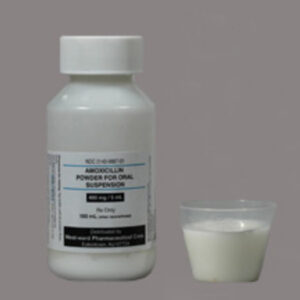
For Oral Suspension: 125 mg/5 mL, 250 mg/5 mL
(3)
Contraindications
History of a serious hypersensitivity reaction (e.g., anaphylaxis or Stevens-Johnson syndrome) to Amoxicillin or to other beta-lactams (e.g., penicillins or cephalosporins)
4)
Warnings And Precautions
- , Drug-Induced Enterocolitis Syndrome (DIES) (5.2) 05/2024 INDICATIONS AND USAGE Amoxicillin is a penicillin-class antibacterial indicated for treatment of infections due to susceptible strains of designated microorganisms.
- Infections of the ear, nose, throat, genitourinary tract, skin and skin structure, and lower respiratory tract. ( 1.1to 1.4)
- In combination for treatment of H. pyloriinfection and duodenal ulcer disease. ( 1.5) To reduce the development of drug-resistant bacteria and maintain the effectiveness of amoxicillin and other antibacterial drugs, amoxicillin should be used only to treat or prevent infections that are proven or strongly suspected to be caused by bacteria. ( 1.6) DOSAGE AND ADMINISTRATION
- In adults, 750-1750 mg/day in divided doses every 8 to 12 hours. In Pediatric Patients > 3 Months of Age, 20 to 45 mg/kg/day in divided doses every 8 to 12 hours. Refer to full prescribing information for specific dosing regimens. ( 2.1, 2.2, 2.3)
- The upper dose for neonates and infants ≤ 3 months is 30 mg/kg/day divided every 12 hours. ( 2.2)
- Dosing for H. pylori Infection: Triple therapy: 1 gram amoxicillin, 500 mg clarithromycin, and 30 mg lansoprazole, all given twice daily (every 12 hours) for 14 days. Dual therapy: 1 gram amoxicillin and 30 mg lansoprazole, each given three times daily (every 8 hours) for 14 days. ( 2.3)
- Reduce the dose in patients with severe renal impairment (GFR <30 mL/min). ( 2.4) DOSAGE FORMS AND STRENGTHS (3)
- Capsules: 250 mg, 500 mg
- , Drug-Induced Enterocolitis Syndrome (DIES) (5.2) 05/2024 INDICATIONS AND USAGE Amoxicillin is a penicillin-class antibacterial indicated for treatment of infections due to susceptible strains of designated microorganisms.
- Infections of the ear, nose, throat, genitourinary tract, skin and skin structure, and lower respiratory tract. ( 1.1to 1.4)
- In combination for treatment of H. pyloriinfection and duodenal ulcer disease. ( 1.5) To reduce the development of drug-resistant bacteria and maintain the effectiveness of amoxicillin and other antibacterial drugs, amoxicillin should be used only to treat or prevent infections that are proven or strongly suspected to be caused by bacteria. ( 1.6) DOSAGE AND ADMINISTRATION
- In adults, 750-1750 mg/day in divided doses every 8 to 12 hours. In Pediatric Patients > 3 Months of Age, 20 to 45 mg/kg/day in divided doses every 8 to 12 hours. Refer to full prescribing information for specific dosing regimens. ( 2.1, 2.2, 2.3)
- The upper dose for neonates and infants ≤ 3 months is 30 mg/kg/day divided every 12 hours. ( 2.2)
- Dosing for H. pylori Infection: Triple therapy: 1 gram amoxicillin, 500 mg clarithromycin, and 30 mg lansoprazole, all given twice daily (every 12 hours) for 14 days. Dual therapy: 1 gram amoxicillin and 30 mg lansoprazole, each given three times daily (every 8 hours) for 14 days. ( 2.3)
- Reduce the dose in patients with severe renal impairment (GFR <30 mL/min). ( 2.4) DOSAGE FORMS AND STRENGTHS (3)
- Capsules: 250 mg, 500 mg
Anaphylactic reactions: Serious and occasionally fatal anaphylactic reactions have been reported in patients on penicillin therapy. Serious anaphylactic reactions require immediate emergency treatment with supportive measures.
5.1)
Drug-induced enterocolitis syndrome (DIES) has been reported with amoxicillin use. If this occurs, discontinue Amoxicillin and institute appropriate therapy.
5.2)
Clostridium difficile-associated diarrhea (ranging from mild diarrhea to fatal colitis): Evaluate if diarrhea occurs.
5.3)
Adverse Reactions
The most common adverse reactions (> 1%) observed in clinical trials of amoxicillin capsules, tablets or oral suspension were diarrhea, rash, vomiting, and nausea.
6.1)
To report SUSPECTED ADVERSE REACTIONS, contact USAntibiotics, LLC at 1-844-454-5532 or FDA at 1-800-FDA-1088 or
www.fda.gov/medwatch.
Drug Interactions
Probenicid decreases renal tubular secretion of amoxicillin which may result in increased blood levels of amoxicillin.
7.1)
Concomitant use of amoxicillin and oral anticoagulants may increase the prolongation of prothrombin time.
7.2)
Coadministration with allopurinol increases the risk of rash.
7.3)
Amoxicillin may reduce the efficacy of oral contraceptives.
7.4)
Use In Specific Populations
Pediatric: Modify dose in patients 12 weeks or younger (≤ 3 months).
8.4)
See 17 for PATIENT COUNSELING INFORMATION.
Revised: 5/2025
DailyMed highlights last updated: 2026-06-24 22:08:11






Reviews
There are no reviews yet.