
Journal Article Summary
The article investigates the continuation rates of long-acting reversible contraceptives, specifically intrauterine devices (IUDs) and contraceptive implants, over a two-year period in a mixed-payer healthcare setting. This topic is significant because the use of these contraceptive methods has been increasing in the United States, and understanding their long-term use can help improve family planning services and reduce unintended pregnancies. The study aims to provide data on how long women continue using these methods, which is crucial for assessing their effectiveness and user satisfaction in real-world scenarios.
The researchers conducted a retrospective review of patient records from the University of Utah Healthcare System, focusing on women who had either a levonorgestrel 52-mg IUD, a copper T380A IUD, or a 68-mg etonogestrel implant inserted between 2004 and 2012. They analyzed data from 8,603 device insertions and found that the two-year continuation rates were 77.8% for the levonorgestrel IUD, 73.1% for the copper IUD, and 75.9% for the implant. The study also identified factors influencing continuation, such as age, ethnicity, and insurance type, with self-pay and public insurance users showing higher continuation rates.
Despite the valuable insights provided, the study has limitations, including potential biases from the retrospective design and the reliance on billing and coding data, which may not capture all instances of device removal or complications. Additionally, the study's population may not fully represent uninsured women, as only a small percentage of participants were uninsured. Patients should discuss their contraceptive options and any concerns about long-term use with their healthcare providers to ensure they choose the method that best suits their needs and circumstances.
Medication Safety Note
This journal article summary is provided for educational purposes only and is not medical advice. Always consult a licensed healthcare professional before starting, stopping, or changing any medication.
Article Cited
- Sanders Jessica N., Turok David K., Gawron Lori M., Law Amy, Wen Lonnie, Lynen Richard. Two-year continuation of intrauterine devices and contraceptive implants in a mixed-payer setting: a retrospective review. American journal of obstetrics and gynecology 2017. DOI: 10.1016/j.ajog.2017.02.003. PMID: 28188772. PMCID: PMC6040817.
Featured Pill Pals Product
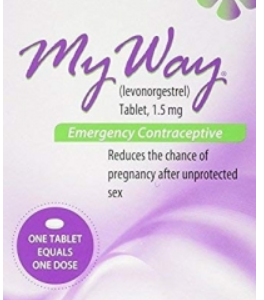
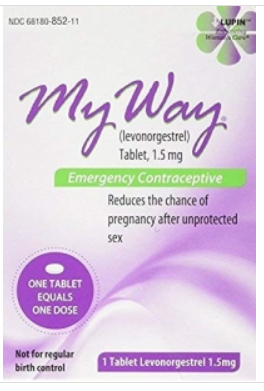
My Way (Levonorgestrel) 1.5 mg Tablet - Generic For Plan B and Morning After Pill --- Lupin Pharma --- Over The Counter
My Way (Levonorgestrel) 1.5 mg Tablet – Generic For Plan B and Morning After Pill — Lupin Pharma — Over The Counter is available through Pill Pals Pharmacy with cash-pay pharmacy pricing and free shipping where available. This is an Over The Counter Product, so no prescription is required.However, your prescriber can still write for it as a prescription, if desired.